
The Real Story: Apple Fixed the iPhone 16e’s Biggest Mistakes
The iPhone 16e was a difficult device to recommend. It lacked MagSafe, offered a mere 128GB of starting storage, and capped wireless charging at a glacial 7.5W. Apple was asking $599 for a smartphone that felt deliberately hobbled.
The iPhone 17e corrects nearly all of that. MagSafe is here. Base storage doubles to 256GB. Wireless charging jumps to a much more capable 15W. The A19 chip replaces the A18, and remarkably, the price stays exactly the same. By doubling the base storage, the 256GB starting tier effectively makes the iPhone 17e $100 cheaper than its predecessor at an equivalent capacity, a point recently echoed by Macworld.
But there is a catch. Two catches, actually. And they both involve the display.
Display: 6.1-inch Super Retina XDR OLED (60Hz)
Processor: Apple Silicon A19 (6-core CPU, 4-core GPU)
Cameras: 48MP Fusion (Rear) / 12MP TrueDepth (Front)
Storage: 256GB base
Connectivity: C1X Modem, MagSafe (15W), USB-C
What You Get: Hardware Specs Breakdown
The iPhone 17e ships on March 11, 2026, in black, white, and a striking new soft pink. Here is a look at the hard numbers.
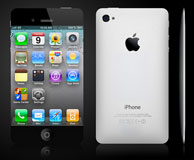
The display is a 6.1-inch Super Retina XDR OLED panel. It still utilizes a notch – rather than the modern Dynamic Island – and the refresh rate remains firmly locked at 60Hz. Apple did add its Ceramic Shield 2 front glass, which the company claims offers three times better scratch resistance than the iPhone 16e, alongside a new seven-layer anti-reflective coating. In testing, Tom’s Guide measured peak brightness at 1,002 nits, just a hair under the iPhone 16e’s 1,028 nits. It is not a meaningful regression, but it is certainly not an improvement either.
Internally, Apple’s A19 chip runs on a cutting-edge 3nm process with a 6-core CPU and a 4-core GPU. That GPU count is an important distinction: the standard iPhone 17 receives 5 GPU cores. The 16-core Neural Engine handles Apple Intelligence tasks entirely on-device. Apple also swapped in the C1X cellular modem – borrowed from the ultra-thin iPhone Air – which Apple claims is up to twice as fast as the standard C1 modem found in the iPhone 16e.
The camera system relies on a single 48MP Fusion lens featuring an f/1.6 aperture, optical image stabilization, and a sensor-crop 2x telephoto capability. The front camera remains a reliable 12MP TrueDepth sensor. However, the most significant camera upgrade is entirely software-driven: next-generation portrait mode – first introduced with the iPhone 15 lineup – finally arrives on the budget tier, enabling automatic depth detection for people and pets without forcing users to manually switch to Portrait mode first. There is no Camera Control button to be found here.
Battery capacity is unchanged from the iPhone 16e, which GSMArena lists at 4,005 mAh. CNN Underscored recently clocked an impressive 16 hours and 18 minutes of continuous 4K video playback in their battery endurance test. USB-C charging tops out at approximately a 50% charge in 30 minutes via wired fast charging.
A19 Benchmarks: Fast Enough, With a GPU Asterisk
Raw performance was never the iPhone 16e’s weak point, but the iPhone 17e widens the performance gap anyway.
According to early reporting from MacRumors, Geekbench 6 results show the iPhone 17e hitting a multi-core score of 9,241, which is nearly identical to the standard iPhone 17’s average of 9,249. Single-core scores hover around 3,320, per analysis from 9to5Mac. For all intents and purposes, CPU performance between the 17e and the standard 17 is functionally identical.
“For daily use, app launches, photo processing, and even AAA gaming, the one missing GPU core is entirely irrelevant.”
The GPU, however, tells a slightly different story. The iPhone 17e’s 4-core GPU posts Metal scores ranging from 31,000 to 31,500, roughly 16% to 20% below the standard iPhone 17’s approximate score of 37,000. NotebookCheck calculated the raw graphical gap at around 20%. For crucial context, though, that 31,000 Metal score still utterly crushes the iPhone 16e’s 23,895, representing roughly a 30% generation-over-generation leap in GPU performance.
Further testing by CNN Underscored confirmed that in Geekbench 6 multi-core testing, the iPhone 17e comfortably outpaces the entire Google Pixel 10 family and edges out the Samsung Galaxy S25 FE, cementing its status as the fastest mainstream smartphone available under $600.
If you are doing sustained graphical workloads or staring at benchmark charts side by side, you will see the 17e trail the standard 17. But for the vast majority of buyers, that missing core will never be noticed.
The Two Things That Still Sting
Shipping a 60Hz display in 2026 is the iPhone 17e’s most defensible criticism. Every single Android competitor at the $599 price point – and many sitting at $399 – ships with fluid 120Hz displays. Tom’s Guide put it bluntly in their review, stating that in 2026, this omission is just not acceptable anymore. Scrolling, system animations, and general UI fluidity feel visibly behind any modern Android smartphone or even the standard iPhone 17. If you have never used a 120Hz phone, you will not miss it. If you have, the downgrade is immediately obvious.
The lack of a Dynamic Island is the second sting. The notch persists. This means users are locked out of live activity glanceable information – such as live sports scores, active timers, or ride-share tracking – on the lock screen or home screen. From a product segmentation perspective, Apple clearly reserves the Dynamic Island as a premium differentiator for the standard iPhone 17 and above. It is an understandable business strategy, but it remains a disappointing reality for buyers.
The Good
- 256GB base storage at $599
- Desktop-class A19 performance
- Welcome return of MagSafe
- Excellent battery efficiency
The Bad
- Outdated 60Hz display refresh rate
- Retains the notch (No Dynamic Island)
- Slightly weaker MagSafe magnetic pull
MagSafe: Better Late Than Never (With a Caveat)
The reintroduction of MagSafe support is arguably the single most impactful upgrade to the user experience. The iPhone 16e’s complete lack of MagSafe arbitrarily locked users out of an entire ecosystem of premium chargers, wallets, car mounts, and photography accessories. The 17e elegantly fixes that.
There is one detail worth noting from our hands-on testing: the iPhone 17e’s magnetic pull is noticeably weaker than other recent iPhone models. Chargers and wallets still attach securely, but you can feel the physical difference when snapping accessories on or pulling them off. For functional, day-to-day purposes, this should not pose a problem. MagSafe wallets hold tight, and charging pads align correctly. However, if you rely on heavy, cantilevered MagSafe accessories – like robust camera rigs – you should test the grip before fully committing.
Crucially, wireless charging now runs at a full 15W via MagSafe, doubling the iPhone 16e’s sluggish 7.5W cap. That upgrade alone makes overnight charging and desk-charging substantially more practical for the modern user.
eSIM + Nano-SIM: A Big Deal for Specific Markets
The iPhone 17e supports both a physical nano-SIM slot and an eSIM simultaneously. This is highly significant for international markets like mainland China, where eSIM adoption continues to face regulatory friction. Users can run one physical SIM and one eSIM concurrently, or opt for two eSIMs with no physical card required at all.
There is one current limitation to be aware of: the eSIM quick-transfer feature between devices is not yet functional on mainland China models as of iOS 26.3.1, based on our hands-on testing. Apple will likely enable this via a routine software update post-launch.
For international buyers and frequent flyers, this dual connectivity approach (physical plus eSIM) adds a layer of travel flexibility that the radically thin, eSIM-only iPhone Air simply cannot match.
Head-to-Head: iPhone 17e vs. Samsung Galaxy S26 FE vs. Google Pixel 10a
| Spec | iPhone 17e | Samsung Galaxy S26 FE | Google Pixel 10a |
|---|---|---|---|
| Price (US) | $599 / 256GB | ~$599 / 128GB | ~$499 / 128GB |
| Display | 6.1″ OLED, 60Hz, notch | 6.3″+ AMOLED, 120Hz LTPO | 6.1″ OLED, 120Hz |
| Chipset | Apple A19 (3nm) | Snapdragon / Exynos | Tensor G4 |
| Geekbench 6 Multi | ~9,241 | ~6,500 – 7,200 (est.) | ~5,500 – 6,000 (est.) |
| Rear Cameras | 1x 48MP Fusion | 3x (main, ultrawide, tele) | 1x 48MP, 1x ultrawide |
| Key Advantage | Raw performance, storage value, MagSafe | 120Hz display, triple camera versatility | Aggressive price, AI features, camera processing |
Sources: MacRumors (March 2026) for iPhone 17e benchmarks; MacObserver and Tech Advisor for competitive positioning. Android benchmark estimates based on predecessor data.
The ultimate takeaway is clear: The iPhone 17e decisively wins on raw Apple Silicon performance and storage-per-dollar. The Galaxy S26 FE wins on modern display quality and camera hardware flexibility. The Pixel 10a wins on initial price and computational photography smarts. Your daily priorities will determine your ideal pick.
Verdict: A Competent Upgrade, Not an Exciting One
The iPhone 17e is precisely the device the iPhone 16e should have been. By including MagSafe, a generous 256GB of base storage, a vastly faster chip, and refined portrait photography, Apple brings its budget tier up to a baseline that finally feels complete rather than compromised. For anyone upgrading from an iPhone 12, 13, or even a 14, the 17e represents exceptionally strong value at $599.
However, it is not a smartphone that will impress anyone who deeply cares about modern display technology. A 60Hz panel and a prominent notch in 2026 are real, tangible concessions, not mere reviewer nitpicks. If silky smooth scrolling and the utility of the Dynamic Island matter to your daily workflow, stepping up to the standard iPhone 17 at $799 is absolutely the correct buy.
For everyone else – parents upgrading, first-time iPhone buyers, or anyone who simply wants a compact, reliable phone that will just work flawlessly for five-plus years – the iPhone 17e finally makes the “budget iPhone” label feel respectable rather than apologetic. Apple has successfully closed the functional gap between its cheapest and mid-tier phones this generation. The remaining gaps are deliberate acts of product segmentation, not engineering oversights.